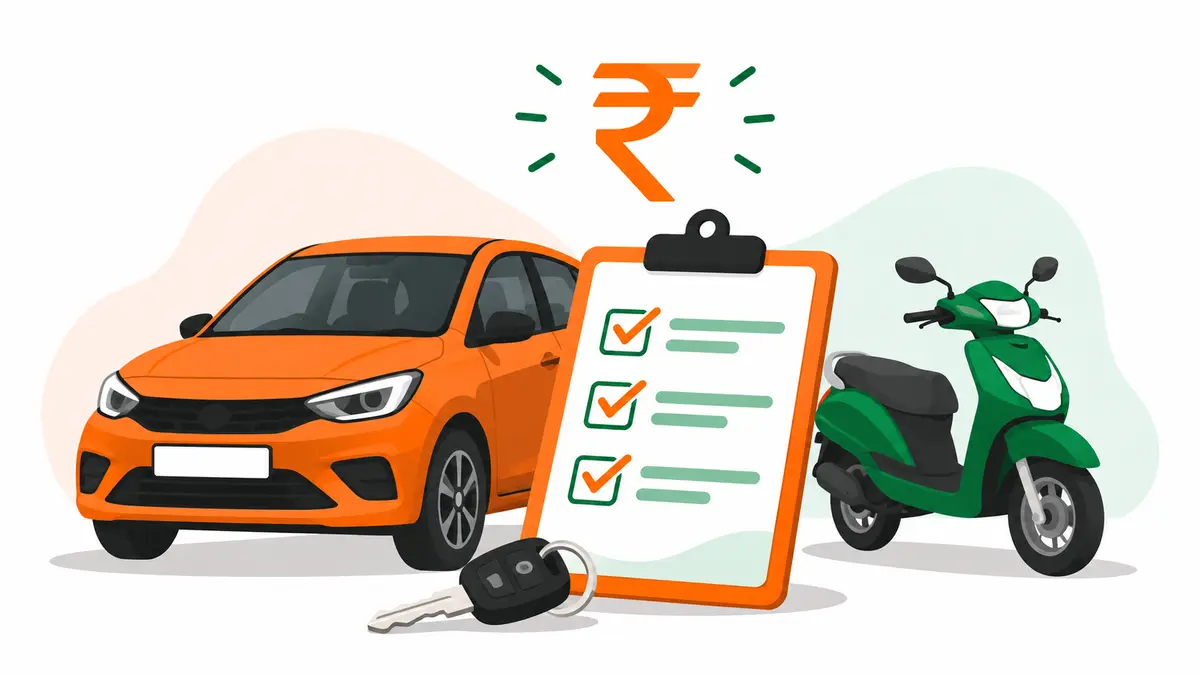
Whether you want to buy used car or bike, or sell one, every deal in India runs on the same four things: a fair price, clean papers, safe payment and a completed RC transfer. Get those right and the deal is boring, which is exactly what you want.
This used vehicle guide puts the whole process in one place, for buyers and sellers, and links to our detailed guides for each step. Bookmark it and work through it in order.
The process at a glance
| Stage | If you’re buying | If you’re selling |
|---|---|---|
| Price | Compare listings of the same model, year and city | Get dealer quotes, then check private listings |
| Checks | Inspect papers on Vahan, then the vehicle, then test ride | Clear challans and any loan before listing |
| Payment | Pay by bank transfer once papers are verified | Hand over only after money shows in your account |
| Paperwork | Collect RC, insurance, PUC, service record, keys | Sign Forms 29 and 30, keep a dated delivery note |
| Transfer | Apply for transfer and move insurance to your name | Report the sale and track the transfer until approved |
Buy used car or bike: how not to buy someone else’s problem
The biggest risks when buying a used vehicle aren’t mechanical. They’re legal: a bank loan still on the RC, pending challans, a seller who isn’t the registered owner, or, rarely, a stolen vehicle.
So check papers before you check paint. Look the registration number up on Vahan or the mParivahan app, match the chassis and engine numbers with the RC, and search for challans. Then inspect the vehicle in daylight with a cold engine, and take a proper test ride.
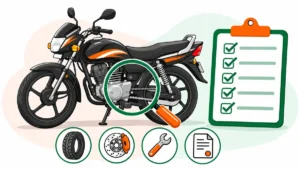
Our used bike buying checklist walks through 15 checks in order, from the RC to the chain sprockets. Most of the paperwork checks apply to cars too.
A few rules that save buyers the most trouble:
- Never pay an advance for a vehicle you haven’t seen in person.
- If the RC shows a financier, pay only after you have the bank’s NOC and Form 35.
- Get the insurance policy moved to your name quickly, or a claim can be refused or delayed.
Selling a used vehicle: protect yourself until the RTO says it’s done
Sellers often think a used vehicle sale ends when the buyer drives away. Legally, it doesn’t. Under the Motor Vehicles Act, the owner is whoever the RTO records show, and the Supreme Court has held a seller liable for an accident caused by the buyer because the transfer had never been recorded (Prakash Chand Daga vs Saveta Sharma, 2018).
That’s why our guide on how to sell a used car in India spends as much time on payment safety and paperwork as on getting a good price. In short:
- Take payment by bank transfer and confirm it in your own banking app. Payment screenshots prove nothing.
- Sign a delivery note with the date and exact time of handover.
- Apply for the transfer together with the buyer on the day of the sale.
- Keep your No Claim Bonus by asking your insurer for an NCB retention certificate.
- Close your FASTag and clear challans.
The RC transfer: the step that finishes the deal
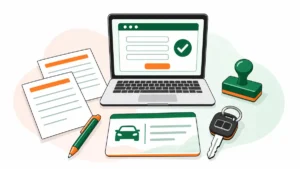
Transfer of ownership for any used vehicle goes through the RTO, mostly online on the Vahan portal now. For a sale within the same state, the seller files Form 29 and both parties sign Form 30. Under Section 50 of the Motor Vehicles Act, the seller reports the sale within 14 days (45 days for an inter-state sale) and the buyer applies within 30 days.
The central fee is modest, about ₹150 for a motorcycle and ₹300 for a car, though states add their own charges on top. Loans, inter-state moves and the death of an owner each need extra forms.
All of that, step by step, is in our guide to the RC transfer process in India.
We’re adding more guides to this section regularly, including checklists for used cars and electric scooters. Browse everything in Vehicles.
Frequently asked questions
Can I sell or buy a vehicle registered in another state?
Yes. The seller gets an NOC (Form 28) from the original RTO, and the buyer re-registers the vehicle and pays road tax in their own state.
Do I need an agent?
Not usually. Most of the process is online now, and the forms are simple. Agents can save time at busy RTOs, but they charge extra and you still need to sign everything yourself.
Which documents should change hands at the sale?
The original RC, insurance policy, PUC certificate, service records, both keys, signed Forms 29 and 30, and the bank’s NOC and Form 35 if there was a loan.